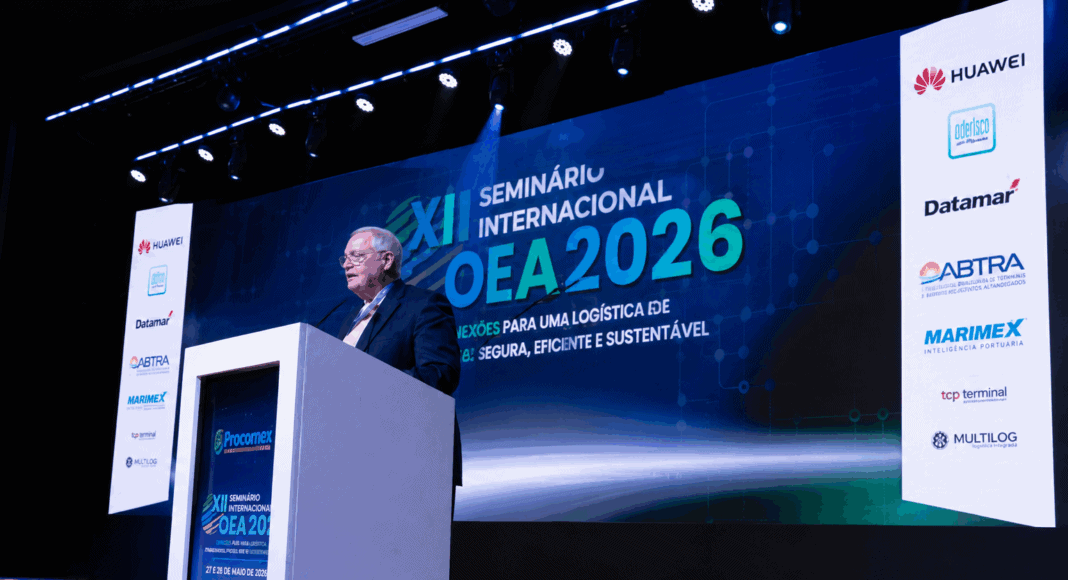

The last Thursday of May (28) concluded in São Paulo, Brazil, the OAS 2026 International Seminar, a meeting that, after twelve consecutive editions, has consolidated itself as one of the main platforms for articulation between public bodies and the private sector to promote trade facilitation and regional logistics integration.
In that context, John Mein, Executive Coordinator of Procomex, spoke with Customs News (*) on the transformations that international trade is undergoing, focusing on the digitization of data exchange in corridors and the challenges of regional cooperation, while encouraging closer participation of Argentine private entities in the initiatives promoted by the organization to simplify foreign trade and jointly strengthen regional integration.
Public-private coordination
CUSTOMS NEWS: You have held leadership positions in the Private Sector Consultative Group (PSCG) of the World Customs Organization and are currently the Executive Coordinator of Procomex, the organization behind this International Authorized Economic Operator (AEO) Seminar. Brazil plays a strategic role in the logistical and commercial integration of South America, as it shares borders with all the countries in the region except Chile and Ecuador. From this perspective, what do you consider to be the main message of this meeting regarding the future of foreign trade in the region?
JOHN MEINThe main message is that we are going through a period of profound transformation. It's not just about technological changes, but above all, about cultural changes.
We are transitioning from a society that still manages documents to one that manages and leverages data, enabling the application of far more advanced analytical and intelligence practices. This evolution is essential to keep pace with the acceleration of international trade.
At the same time, the way the public and private sectors interact is changing, as is the way different public agencies interact with each other. The challenge is to work in a coordinated manner, with a national vision, moving away from fragmented perspectives focused exclusively on each individual institution.
In this new scenario, the participation of the private sector is essential. A paradigm shift is also underway: it is no longer just about managing physical borders or checkpoints, but about managing increasingly complex and integrated value chains.
Land borders
CUSTOMS NEWS: Indeed, the seminar's motto is "Connections for secure, efficient, and compliant logistics." Does the competitiveness of foreign trade increasingly depend on the coordination between public agencies and the private sector?
JOHN MEIN: Undoubtedly. I believe significant progress has been made in this area, although there is still a long way to go.
In the area of compliance and trust programs, there are several examples from Brazil that were analyzed during the day, such as the AEO Program, the Operator Compliance Program and the Remessa Conforme initiative, in addition to the proposal to develop a similar scheme for port facilities, which does not yet have a specific implementation.
All of this shows that significant steps have been taken, but also that ample opportunities remain to deepen and consolidate these processes. In short, there has been concrete progress, but much remains to be done.
Regional roadmap
CUSTOMS NEWS: Brazil has been making progress in institutional integration, digitalization, and trade facilitation. However, in this process, what are the main challenges that remain to achieve more efficient and competitive operations?
JOHN MEIN: Coordinated border management remains one of the major challenges for trade facilitation. In practice, the logistical fluidity of goods is often determined by the performance of the agencies involved in border controls, as the pace of processes is ultimately dictated by the slowest actor in the chain.
The situation is even more complex at land borders, where efficiency depends not only on the agencies of a country, but also on the operational capacity of the authorities on the other side of the border.
Therefore, there is ample room for progress in coordinated border management. In this context, work is underway with the Inter-American Development Bank (IDB) on an initiative aimed at strengthening this agenda among the Southern Cone countries, particularly Brazil, Argentina, Paraguay, Uruguay, and Chile.
CUSTOMS NEWS: Could you explain what the initiative being promoted together with the Inter-American Development Bank (IDB) consists of and what specific objectives it pursues?
JOHN MEIN: The initiative arises from two previous diagnoses: one prepared by Procomex on coordinated border management in MERCOSUR, with financing from the World Bank, and another developed within the framework of the Capricorn Bioceanic Corridor, with support from the IDB.
Both studies identified more than 300 recommendations aimed at improving border processes. However, the main challenge lies not in developing diagnoses, but in the effective implementation of the measures by the various government agencies involved.
Based on this need, the IDB supported the proposal and provided financing to boost the project, designating Procomex as the technical secretariat for this regional coordination effort.
The initiative brings together agencies from Brazil, Uruguay, Paraguay, Chile, and Argentina linked to the areas of customs, transport, and agriculture, as well as national trade facilitation committees. Representatives from the various countries involved in the agenda participate in this framework.
● Argentina: Gisela Montenegro (Customs), Yanina Outi (Agriculture), Reina Sotillo (National Border Commission) and Jorge Zarbo (Transport).
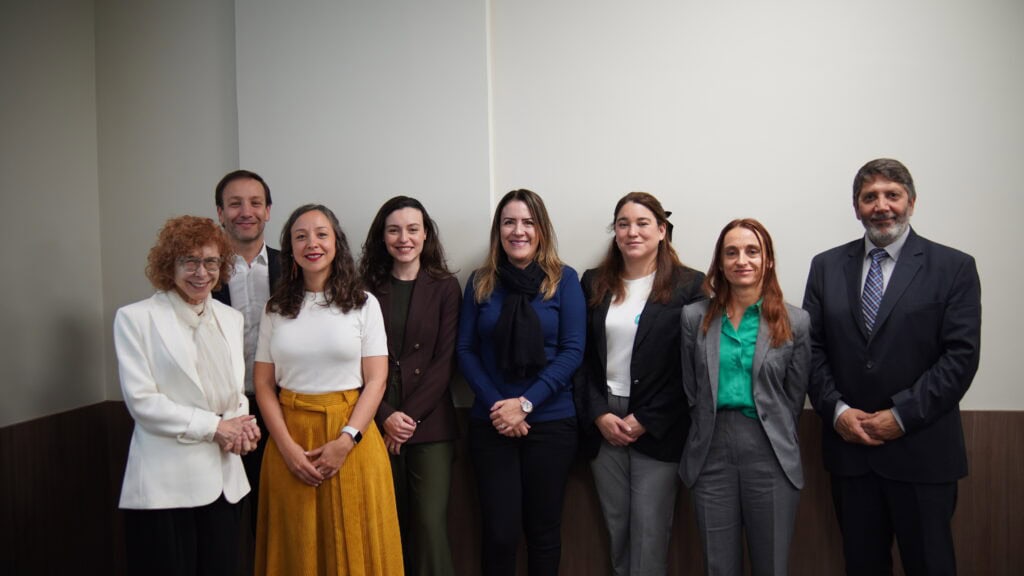
● Brazil: Antônio Márcio de Oliveira Aguiar (Customs), Michelle Coghetto da Rocha (CNFC), Cléverson Freitas (Agriculture) and Cálicles Mânica (Transportation).
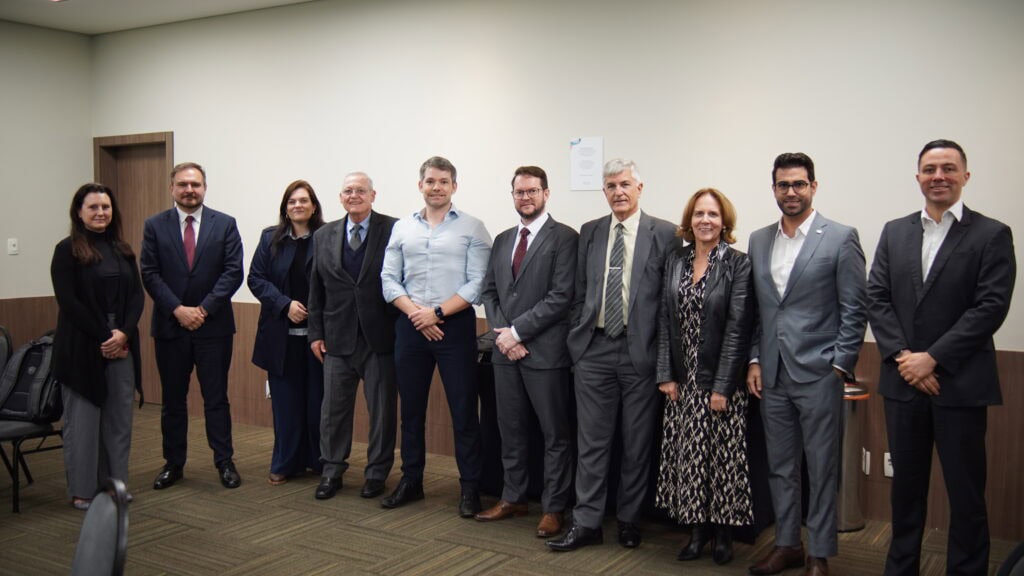
● Chile: Bernardita Palacios Sheggia (Customs), Muriel Gana Schulbach (Agriculture) and Pablo Ortiz (Transportation) and Ninel Calistro (CNFC)
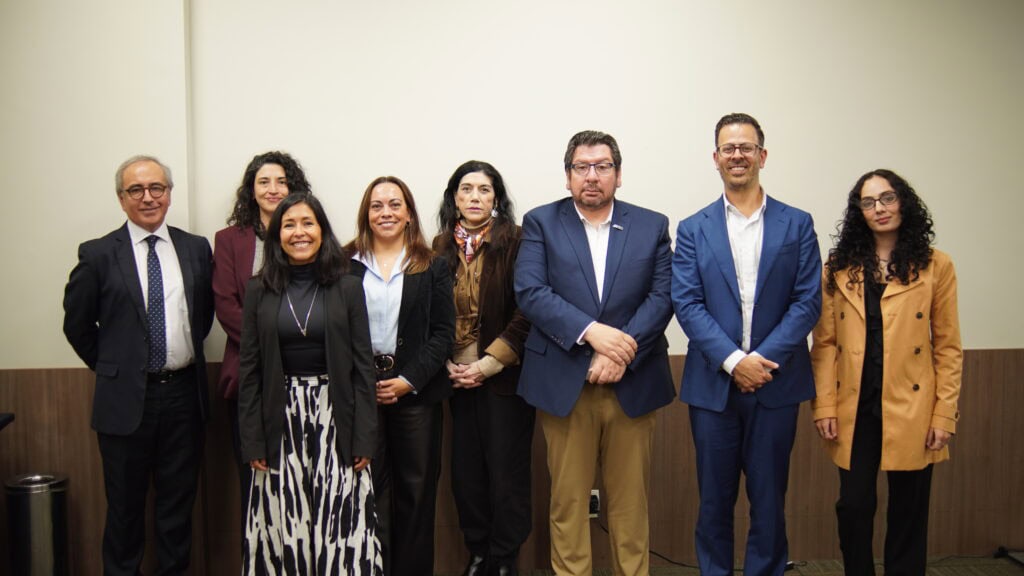
● Uruguay: Laura Dighiero (Customs), Agr. Engineer. Pablo Faguaga (Agriculture), María Fernanda Ouviña (Transport) and Valeria Brito (CNFC).
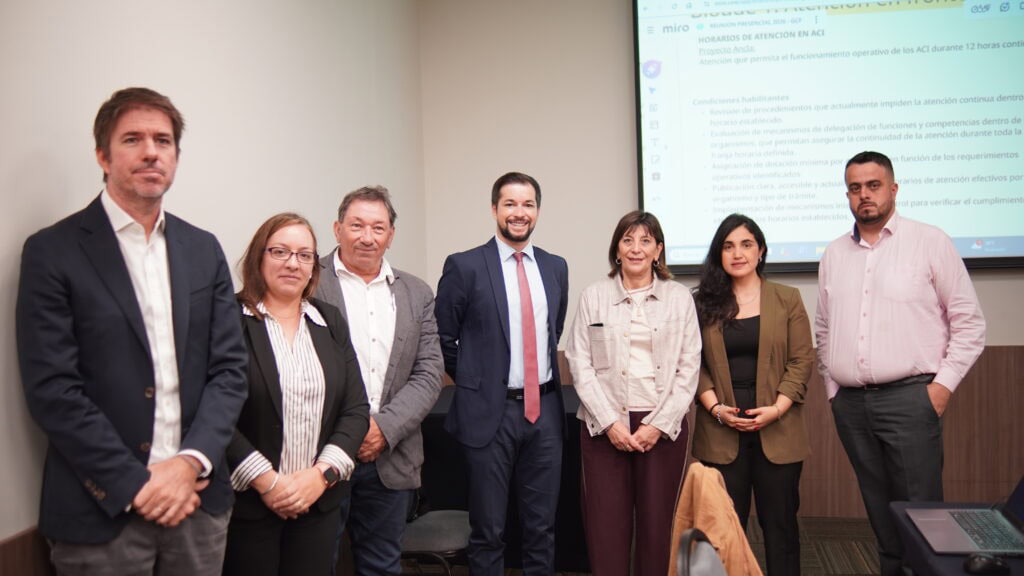
● Paraguay: Julio Eduardo Rojas Ramírez (Agriculture), Hernán Gabriel Muñoz Pérez (CNFC), Juan Ramón Velázquez Vera (Transport), Marcelo Ortiz (Customs) and Cinthia Acosta (Customs).
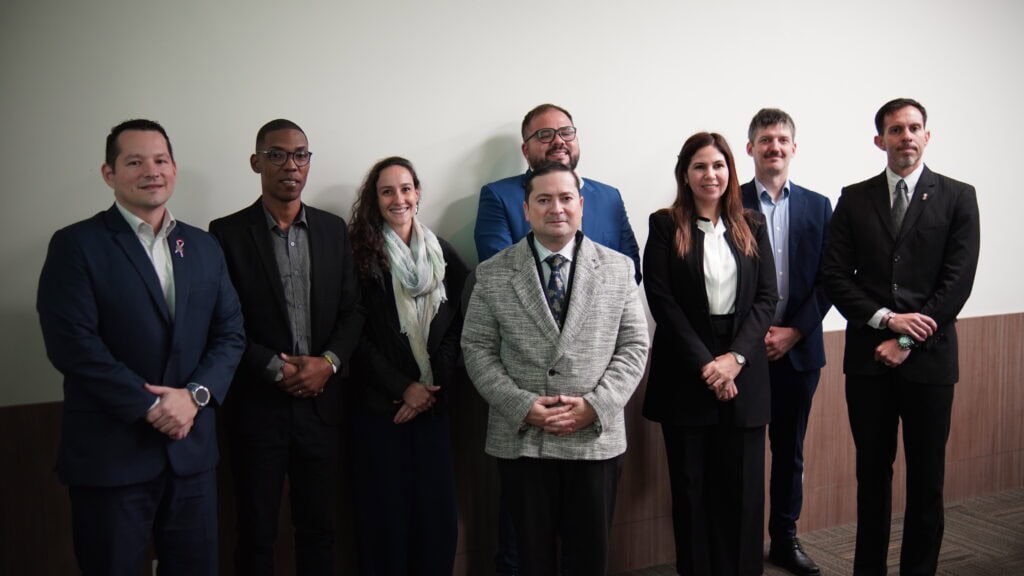
The goal is to build a common roadmap to advance the implementation of concrete improvements towards more coordinated and efficient border management, which is scheduled to be launched in March 2027.
Alternative corridors
CUSTOMS NEWS: Do you think Latin America is entering a new stage of regional cooperation based on trust, interoperability and border coordination?
JOHN MEIN: I believe we are making progress, but the road to effective integration is still long. There is a historical tradition of working separately, both between agencies and between countries, and changing that approach requires time and effort.
In terms of interoperability, the technical challenges are probably the easiest to resolve once the political will to do so exists. Therefore, the main challenge remains strengthening the political will necessary to drive deeper integration.
However, economic reality itself is pushing our countries in that direction. In the case of Brazil, but also Argentina and Paraguay, the development and internationalization processes of their economies are generating both the conditions and the pressure to move towards greater regional integration.
Traditionally, much of Brazil's infrastructure and strategic vision has been oriented toward the Atlantic. Today, that vision is beginning to broaden. Economic and commercial realities demand a more comprehensive approach to territory and logistical connections, considering new routes and opportunities to link with other markets.
Added to this are the changes in the international geopolitical landscape. Asia has consolidated its position as the most dynamic region of the global economy, and better regional integration can facilitate our countries' connection to those markets. The more integrated our economies and logistics networks are, the greater the opportunities to capitalize on this dynamism.
Likewise, the challenges arising from climate change are becoming increasingly relevant in logistics planning. For example, the Panama Canal periodically faces difficulties when droughts reduce water levels and affect its operations. This reality reinforces the need to develop alternative routes and complementary logistics corridors that provide greater resilience to international trade.
In this context, the physical and logistical integration of South America ceases to be merely a strategic aspiration and becomes an increasingly evident necessity.
CUSTOMS NEWS: To conclude, what message would you like to leave for Argentina after this OAS 2026 International Seminar?
JOHN MEIN: My message is this: we want more business associations and entities from Argentina to join Procomex Regional, so that we can analyze and address together the main challenges we share as a region.
Conversation conducted by María Elsa Coronel for Aduana News, within the framework of the XII OAS 2026 International Seminar, held in São Paulo, Brazil.
Special thanks to Erika Medina Barrantes for her kind collaboration in coordinating this interview, and to Mr. John Mein for his willingness and generosity in sharing his experience and knowledge for the benefit of foreign trade in our region.
The photographs accompanying this interview were kindly provided by Procomex.

Aduana News is the first Argentine customs newspaper to launch its digital version. With 20 years of experience, its publications and initiatives aim to provide the most relevant knowledge on customs issues in order to contribute to safe trade in the region.