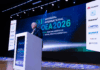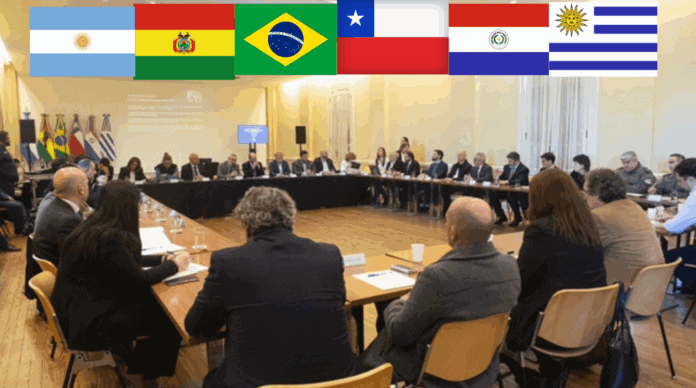
Towards the end of the month, the Chief of the Cabinet of Ministers reported that the August 26th, XNUMX The VI Meeting of the National Border Commission (CNF) was held at the Domingo F. Sarmiento Libertad Palace, with the participation of representatives of Brazil, Chile, Paraguay, Uruguay and Bolivia.
For the first time since the 1994 Constitutional Reform—which granted the Chief of Staff ultimate authority over border matters—the CNF received representatives from the five neighboring countries, along with national authorities in charge of border crossings and centers, at its highest level.
The meeting was chaired by the Deputy Chief of Staff, José Rolandi, who stated: "The Government's efforts seek to facilitate and increase trade and the movement of citizens, reducing costs and prioritizing Argentina's integration with its neighboring countries and the rest of the world."
Rolandi also highlighted that "The official agenda focuses on deregulation and simplification of procedures, with a ministry specifically dedicated to this purpose and with policies that cut across every state agency."
PAD section and simplification
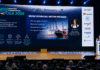
Also speaking were the Undersecretary of Foreign Policy of the Ministry of Foreign Affairs, Juan Navarro; the Deputy Director General of Customs, Horacio Alasia; and the Director of Customs Process Reengineering, Horacio Menem, who presented the progress of the Digital Customs Portal (PAD), defined as “a key tool for simplifying and facilitating procedures”. The PAD is "A computer system that integrates and optimizes operational processes at our country's borders, streamlining the entry and exit of transportation and merchandise.".
The general director of the Migratory Movement, Juan José Cappella, referred to the migration facilitation and the achievements reflected in international steps, particularly in:
- Posadas–Encarnación (Paraguay): unified immigration control and streamlining of procedures.
- Horcones – Cristo Redentor System (Chile): a key step for trade and the transit of people.
The National Director of Habilitation, Inspection and Border Health of the Ministry of Health, Thelma Trotta, explained Argentina's leadership role in the work with the MERCOSUR and neighboring countries, with action also on the border of Rivera and Santana do Livramento, between Brazil and Uruguay.
Gustavo Ferragut, National Director of Borders and Waterways of the Ministry of Security, also spoke at the meeting. He emphasized: "Border security is a pillar for growth, development, and regional security, as well as for the fight against smuggling and transnational organized crime."
Ferragut also highlighted that "The plans and programs that integrate federal and provincial forces, judicial forums, and local governments already show concrete results in the protection of border populations.".
This approach allows for progress toward integrated management by strengthening trade facilitation, migration, and border security, in cooperation with neighboring countries.

Aduana News is the first Argentine customs newspaper to launch its digital version. With 20 years of experience, its publications and initiatives aim to provide the most relevant knowledge on customs issues in order to contribute to safe trade in the region.