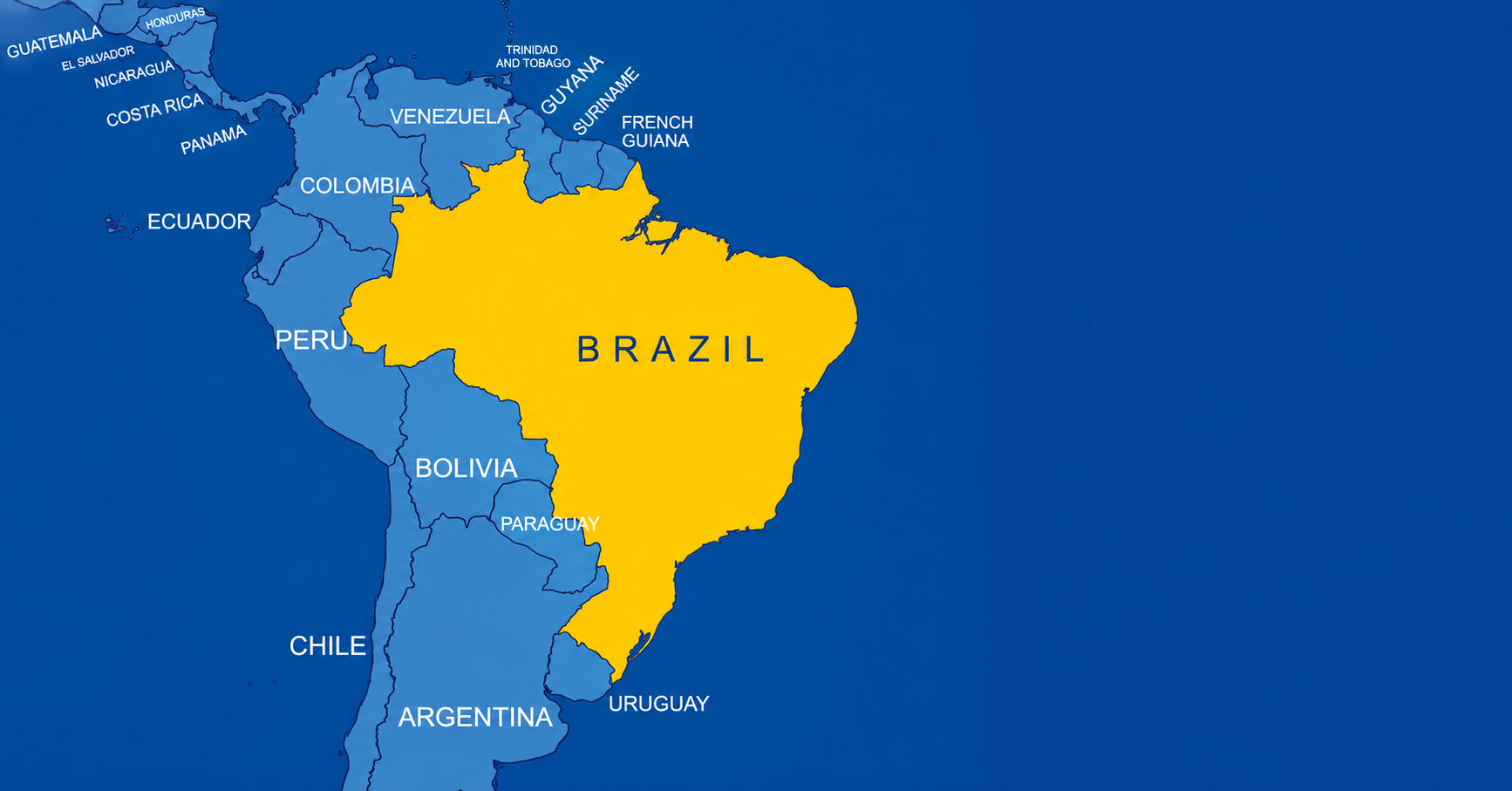
Summary: 1.- Introduction. 2.- Background: 2.1.- The Agreement on International Land Transport (ATIT) of the Latin American Integration Association (ALADI). 2.2.- The Agreement on River Transport through the Paraguay-Paraná Waterway. 3.- The SINTIA System: 3.1.- Origin. 3.2.- Operation. 3.3.- Implementation. 4.- Benefits of SINTIA for regional trade. 5.- SINTIA and International Standards. 6.- Challenges and opportunities. 7.- Final words.
1.- Introduction
The International Customs Transit Information System (SINTIA) is an electronic system used by some of the member countries of the Latin American Integration Association (ALADI) to manage information related to the transit of goods by land and river routes across their borders.
The Agreement on International Land Transport (ATIT) provides for the use of technological advances for the exchange of information between the customs of the signatory countries, in order to facilitate the application of customs procedures and strengthen cooperation.
Accordingly, the MERCOSUR Member States agreed to the computerization of the International Cargo Manifest/Customs Transit Declaration (MIC/DTA) and the monitoring of the operation between the point of departure and the destination, through electronic information exchange processes between their customs administrations.
The designed procedure consists of the computerized recording of the MIC/DTA data, the sequence of customs control events on the operation in the different countries participating in the transit and the provision of information on all these events for all countries involved through electronic data transmission, which allows the determination of the processing status of the operation.
The system provides online information on the declaration of goods in the country of origin - including their nature, value and origin - and allows for the identification of whether export operations were actually carried out at the start of transit, thus enabling the destination customs to know in advance the goods in transit in order to make resource forecasts and activate control mechanisms.
2. Background
2.1.- The Agreement on International Land Transport (ATIT) of the Latin American Integration Association (ALADI).
The Agreement on International Land Transport (ATIT), registered as Partial Scope Agreement (PSA) No. 3 notarized under Article 14 of the Montevideo Treaty 1980 (TM80) of ALADI (ALADI/PSA/A14TM/3), signed on January 1, 1990 by the Argentine Republic, the Republic of Bolivia, the Federative Republic of Brazil, the Republic of Chile, the Republic of Paraguay, the Republic of Peru and the Oriental Republic of Uruguay (Seven of the thirteen member countries of ALADI), is the main instrument that regulates the provision of land transport services by road and rail between the aforementioned countries, establishing the general and essential principles for developing a common and uniform international transport service.

The Agreement regulates direct bilateral traffic between two countries or in transit through a third country and prohibits transport between two points in the same country carried out by companies from another country; it establishes an international customs transit regime and imposes the obligation to take out insurance for contractual and non-contractual liabilities arising from any international land transport operation.
The ATIT, in its Annex, defines (and regulates) International Customs Transit as the regime by which merchandise subject to customs control is transported from the jurisdiction of a customs enclosure located in one country to the jurisdiction of another customs enclosure located in another country, in a single transport operation that crosses one or more borders and in sealed or taped vehicles, providing that they enjoy a suspension of payment of import or export taxes that may be payable.
Among its General Principles, it is worth highlighting: a) the territoriality of national legislations as subsidiary legal bodies of ATIT for the tax, fiscal and customs aspects inherent to the transport operation (articles 4, 11 and 34), and b) the recognition of the validity of the documents issued by a signatory country in all the remaining ones (article 9), which made possible the use of a single unified form called MIC/DTA (International Cargo Manifest/Customs Transit Declaration), which contributed to the simplification of registration in the different jurisdictions, and to the harmonization of its guarantee regime (the fleet of trucks of the authorized transport companies).
Data to be reported in the MIC/DTA include:
- Carrier information: name and address of the carrier responsible for transporting the goods.
- Shipper information: Name and address of the exporter or seller shipping the goods.
- Consignee information: Name and address of the importer or buyer who will receive the goods.
- Cargo description: quantity, weight, volume and detailed description of the goods transported.
- Number of packages: the number of packages containing the transported goods.
- Cargo value: the commercial value of the goods transported.
- Means of transport: registration number or identification of the transport unit.
- Origin and destination: place of origin of the goods and place of final destination.
- Transit countries: countries through which the transport will pass in transit.
- Signature and date: signature and date of the sender or authorized representative.
The ATIT has significantly contributed to the facilitation of trade and transport of goods between ALADI member countries, improving transport efficiency and reducing associated costs. In addition, the Agreement has fostered cooperation between member countries in transport matters, which has allowed for greater integration and better connectivity between countries in the region.
2.2.- The River Transport Agreement on the Paraguay-Paraná Waterway (Port of Cáceres – Port of Nueva Palmira).
On June 26, 1992, in the Las Leñas Valley, Mendoza Province, Argentine Republic, the Plenipotentiary Ministers of the host country, the Republic of Bolivia, the Federative Republic of Brazil, the Republic of Paraguay and the Eastern Republic of Uruguay, signed the AGREEMENT ON RIVER TRANSPORT BY THE PARAGUAY-PARANA WATERWAY, registered as Partial Scope Agreement (AAP) No. 5 notarized under Article 14 of the 1980 Montevideo Treaty (TM80) of ALADI (ALADI/AAP/A14TM/5), and internalized into the Argentine legal system under Law 24.385, with the objective of facilitating navigation and commercial transport on the Paraguay and Paraná rivers, from the Port of Cáceres in Brazil to the Port of Nueva Palmira in Uruguay, establishing a common regulatory framework that favors the development of the region and facilitates and allows access to markets. overseas (of vital importance for Paraguay and Bolivia).

The total route is approximately 3400 km, and crosses the territories of five MERCOSUR countries.
The Hydroway's standard vessels are "barges" that are transported in "convoys" or "push trains", propelled by a push tug, where each barge measures approximately 12x48 meters and has a load capacity of 1.500 tons.
The Agreement prohibits the application of taxes, levies, duties or fees on transport, as well as direct restrictions that prevent this in relation to vessels or their cargoes, and proposes identical favourable treatment for third countries, as regards free transit and transfer of cargo, lightening, transshipment and storage of merchandise, preventing discrimination based on the origin of the cargo and/or the points of departure, entry, exit or destination or any circumstance related to the ownership of the merchandise, the vessels or the nationality of persons.
In their Additional Protocol on customs matters, the signatory countries agreed to apply the Customs Transit Regime to the transport of goods by the Waterway that includes at least the territories of two signatory countries, crossing at least one border between the customs office of departure and the customs office of destination, without discriminating between goods from the signatory countries or those originating from or destined for third countries.
To this end, it is provided that units used for the transport of goods (i) can be fitted with customs seals in a simple and effective manner; (ii) that no merchandise can be removed from the sealed part of the transport unit or introduced into it without leaving visible traces of irregular manipulation or without breaking the customs seal; (iii) that they are easily accessible for customs inspections; (iv) that there are no hidden spaces and (v) that they are identifiable by means of engraved marks and numbers that cannot be altered or modified.
To be eligible for the international customs transit regime, a duly certified MIC/DTA must be submitted to the authorities of the customs office of departure for each transport unit.
The carrier for the corresponding section or the authorised multimodal transport operator are responsible before the customs authorities for compliance with the obligations arising from the application of the international customs transit regime, in particular, they are obliged to ensure that the goods arrive intact at the customs of destination, being the only ones responsible for customs infringements arising from inaccuracies in their declarations.
At the Customs office of departure, the goods must be presented accompanied by a MIC/DTA and the necessary commercial and transport documents, where it will be checked that they are duly completed, that the transport unit offers the necessary security, and that the transported goods correspond in nature and number to those specified in the declaration.
At the customs office of destination, the customs authorities shall ensure that the seals or identification marks are intact and shall carry out such checks as they deem necessary to ensure that all the obligations of the declarant have been fulfilled.
The Agreement establishes that other customs offices along the waterway will refrain from carrying out inspections or controls on transport units, unless they enter the port to carry out operations, in which case they will limit themselves to reviewing the documentation and external conditions of the cargo without verifying the merchandise; without prejudice to this, it is clarified that the right of customs offices, in the event of suspected fraud, to carry out visits, verification of cargo or other controls deemed appropriate is not limited.
3.- The SINTIA System
3.1.- Origin.
On June 25, 2004, during the LIV Ordinary Meeting of the Mercosur Common Market Group (GMC) held in the City of Buenos Aires, the GMC Resolution No. 17/04, titled: “Standard on the Computerization of the International Cargo Manifest / Customs Transit Declaration and the Monitoring of the Operation between the States Parties of MERCOSUR”, which marks the beginning of the SINTIA System.
It establishes a procedure for the computerization of the International Cargo Manifest/Customs Transit Declaration and for monitoring the operation between the States Parties to the Southern Common Market (MERCOSUR).

Its scope of application includes International Customs Transit operations carried out under the Partial Scope Agreement on International Land Transport, the regime of Transport of Parcels in Regular Line Passenger Buses authorized for international transport and establishes that it can be applied to the River Transport Agreement on the Paraguay-Paraná Waterway.
The requirements for the registration of carriers, the formalization of the transit declaration and the transmission of information between the customs administrations of the Contracting States are established. In addition, the responsibilities of carriers and customs administrations in the transit operation are established.
Article 4 provides that Technical Committee No. 2 (Customs Affairs) of the MERCOSUR Trade Commission should prepare a schedule for the implementation of the procedure and, consequently, monitor it.
This Technical Committee No. 2, currently called Customs Affairs and Trade Facilitation (CT2), structurally depends on the Mercosur Trade Commission (CCM), is coordinated by the heads of the customs services of the Member States and has, in turn, Technical Subcommittees made up of customs officials specialized in the areas of information technology, valuation, procedures and legal matters.
It is a true customs integration plant. In addition to the SINTIA System, the Customs Records Information Exchange System was developed within the system. (INDIRA), the Baggage Regime, the Regime for the Circulation of Cultural Goods, the Regime for the Circulation of Promotional Material, the Rules for the circulation of private and rental tourist vehicles, the Regime for the Transport of Packages in passenger buses, the Valuation Manual and the Risk Control and Management regulations, to name just a few.
Its working methodology is very simple and effective. With each Pro-Tempore Presidency (semiannual and rotating), an analysis is carried out of: a) the issues in process and, b) the pending issues in the customs integration process. With regard to the issues in process (a), a schedule of implementation is established, and with regard to the new issues pending development (b), priorities are selected, tasks are distributed among the subgroups, an agenda is established and work begins until the conclusion of the work. Then, the project is submitted to the CCM, which, if approved, is sent to the Decision-Making Body empowered to issue the rule or implement the developed process.
In the case of the SINTIA System, one of the Technical Subcommittees that make up CT2 has played a fundamental role: the Technical Subcommittee on Customs Procedures and Customs Informatics (SCTPAI).
3.2.- Operation.
It is an event-oriented system, meaning that when a certain event occurs, information is sent to the customs offices involved in the transit.
The system anticipates the following events:

Let's see what each of them consists of:
a) Formalization of an International Customs Transit (TAI) operation – “OFTAI", to be carried out by the customs office registering the TAI operation in the State Party: the transmission of the officialization event to the intervening customs offices will be carried out jointly with that of the departure event.
b) Departure of a TAI operation – “PATAI", to be carried out by the cargo customs office of the TAI operation in the State Party of departure: after all the requirements necessary for the application of the regime have been fulfilled, the controls have been completed, the seals have been placed and the departure of the TAI has been authorized, the customs office of departure will electronically transmit the departure event, which implies the authorization to begin the transit operation under the protection of a TAI.
c) Departure of a TAI operation from the State Party of departure – “SATAI", to be carried out by the border customs of the State Party of departure: when the means of transport and the goods it is transporting, after having fulfilled all the requirements, controls and formalities to which they are subject, have been authorized by the border customs of the country of departure to continue the authorized itinerary, having concluded the transit in its territory.
d) Entry of a TAI operation into the State Party of passage – “EPTAI", to be carried out by the border customs of the State Party of passage: when the means of transport and the goods it is transporting, after having fulfilled all the requirements, controls and formalities to which it is subject, have been authorized by the border customs of entry to the State Party of passage to continue the authorized itinerary.
e) Departure of a TAI operation in the State Party of passage – “SPTAI", to be carried out by the border customs of the State Party of passage: when the means of transport and the goods it is transporting, after having fulfilled all the requirements, controls and formalities to which it is subject, have been authorized by the border customs of exit of the State Party of passage to continue the authorized itinerary, having concluded the transit in its territory.
f) Entry into the State Party of destination of a TAI operation – “EDTAI", to be carried out by the border customs of the destination State Party: when the means of transport and the goods it is transporting, after having fulfilled all the requirements, controls and formalities to which it is subject, have been authorized by the border customs of entry to the destination State Party to continue the authorized itinerary, destined for the customs of destination of the TAI.
g) Completion of a TAI operation – “FITAI", to be carried out by the customs office of destination of the destination State Party: when the means of transport and the goods it is transporting, after having fulfilled all the requirements, controls and formalities to which it is subject, have been authorized by the customs office of destination to consider the TAI operation completed and finished, leaving the goods in a condition to be subjected to a permitted destination or customs operation.
h) Communication of the destination or operation after the TAI – “DETAILS", to be carried out by the customs office of destination of the destination State Party, within forty-eight (48) hours of the destination or operation after the TAI, in order to enable its consultation by the customs of the States Party, to the extent that they conclude the corresponding developments.
i) News (occurrences) of a TAI operation – “NOTARIES": This is electronic information to be recorded by the customs of the Computer Route after the departure event.
3.3.- Implementation
Terrestrial Area (SINTIA 1)
The SINTIA System was implemented in June 2009 between the Republic of Argentina and the Republic of Paraguay, beginning to transmit the events of Officialization (OFTAI) and Departure of International Customs Transit (PATAI).
In a second stage, which began in April 2010, the sending of the Departure from the Party State of Departure (SATAI) events and the Entry to the Party State of Destination (EDTAI) event began.
In June 2011, the sending of End of Transit events (FITAI) and Communication of Destinations after Transit (DETAI) began.
In November 2012, Uruguay began broadcasting OFTAI and PATAI events from its transits with Argentina.
Bolivia has been broadcasting the OFTAI, PATAI and SATAI events since October 2015 (with Argentina and Chile).
Chile has been broadcasting the OFTAI and PATAI events since 2016 (with Argentina) and also with Bolivia.
And so this evolutionary process continued until reaching the current state of implementation of SINTIA (terrestrial) which we can summarize as follows:
– Uruguay-Argentina, full exchange, all active events
– Uruguay-Paraguay, full exchange, all active events
– Argentina-Paraguay, full exchange, all active events
– Argentina-Bolivia, the system has been implemented and put into operation.
– Argentina-Chile, some events have been implemented.
– Paraguay-Bolivia, pilot tests.
– Uruguay-Bolivia, pilot tests.
– Brazil has not yet implemented the SINTIA System.
River Area (SINTIA 2)
The work related to the implementation of the MIC/DTA Fluvial of the Paraguay-Paraná Waterway, originated in 2019 under the auspices of the “Agreement Commission” and within it, in the “Working Group on Customs Affairs” in which delegates from Argentina, Bolivia, Brazil, Paraguay and Uruguay participate.
In this Working Group, the agreements reached in the “Technical IT” and “Technical Legal” Sub-Groups, which carried out the process of harmonization and parameterization of the different events, were consolidated. Please note that the officials who make up this Working Group are the same ones who make up the Technical Subcommittee on Customs Procedures and Customs IT (SCTPAI) plus the representatives of the Republic of Bolivia, so it is in this area where the work that the aforementioned MERCOSUR regulation enables for the waterway is continued.
In Argentina, through AFIP General Resolution No. 4940/2021, the procedure for the registration and monitoring of the electronic fluvial International Cargo Manifest/Customs Transit Declaration (MIC/DTA) was established through the use of SINTIA.
The general procedure consists of the ATA BODEGA first registering the data corresponding to the transport title and its shipment/s through the “web service".
Shipments are understood to be each of the fractions into which the journey of the merchandise will be divided, it could be a single shipment. It is in the shipment where you will declare the quantities and type of packaging, and each shipment will be part of a MIC DTA, which will correspond to a barge or self-propelled vehicle in which it must be transported.
The implementation process has been divided into stages and the second stage is currently being developed in the Argentina-Paraguay pilot plan.
4.- Benefits of SINTIA for regional trade
The SINTIA system offers several benefits for facilitating the flow of goods in the region, among which we can highlight:
- Reduced waiting times: SINTIA enables carriers to submit and process the information required for the transit of goods through customs in an automated and real-time manner, reducing waiting times and streamlining transit processes.
- Increased efficiency: By using SINTIA, carriers can complete all customs formalities electronically, reducing the need for paperwork and increasing efficiency in handling customs formalities.
- Greater transparency and security: SINTIA allows customs authorities to access real-time information on the transit of goods, which increases transparency and security in international trade operations.
- Cost savings: By reducing waiting times, increasing efficiency and improving transparency and security, SINTIA can help carriers reduce the costs associated with the transit of goods across customs borders.
- Uniformity of registration in each of the customs systems.
- Have online information regarding how the goods were declared (including their nature, value and origin) in the country of origin
- Allowing customs at destination and in transit to know the goods in transit and thus be able to carry out a risk analysis and forecast the necessary resources.
- To determine whether the goods actually arrived at their destination and were correctly dispatched.
5.- SINTIA and International Standards
The SINTIA system is perfectly aligned with the SAFE Regulatory Framework developed in 2005 by the World Customs Organization (WCO), as it promotes the electronic and automated management of customs transits, allowing the exchange of information between customs offices in different countries, and thus, the traceability of the logistics chains involved in each operation.
We must remember that the SAFE Framework marked the beginning of modern supply chain security standards and announced the start of a new approach to the control of goods, of a comprehensive, holistic nature, which takes care of the security of the entire logistics chain, from the exporter who sends the goods to the importer who receives them, ensuring the reliability of all the sectors involved, while recognizing the importance of a closer partnership between customs and the private sector.
In this way, a true "paradigm shift" took place worldwide: there is no longer a tiered vision (importing country / exporting country), but rather an attempt is made to ensure the entire process, the entire logistics chain of the operation, from the exporter's factory to the importer's warehouse.
Control tasks are no longer limited to events that occur once borders have been crossed, but rather anticipate them and expand to events that occur outside the sovereign space.
The SAFE Framework consists of four core elements that seek to: (i) harmonize advance information requirements, (ii) use a consistent risk management approach, (iii) employ elements of non-intrusive inspection at source of cargo transports, and (iv) offer benefits to companies that comply with security standards (such as Authorized Economic Operators). These four elements are supported by three pillars: Customs-Customs, Customs-Business partnership, and Customs-Other Governmental and Intergovernmental Organizations cooperation. The Customs-Customs pillar relies on the exchange of advance information to identify high-risk cargoes and means of transport and use modern technology to inspect them. The Customs-Business pillar focuses on the creation of an international system to identify private companies that offer a high degree of security guarantees in the supply chain. The Customs-Other Agencies Cooperation pillar seeks to ensure that the government's response to supply chain security challenges is comprehensive (all sectors), efficient and effective.
As can be seen, the SINTIA system adapts precisely to modern control standards implemented internationally.
X.- Challenges and opportunities
The SINTIA system has evolved over time, and with the development of new technologies, there are several ways in which it could be further improved. Some of the possible improvements are:
- Integration with blockchain technologies: Blockchain technology can be used to improve transparency and security in the exchange of customs information.
In this regard, at the CVII Meeting of the Technical Committee No. 2 “Customs Affairs and Trade Facilitation” of MERCOSUR, held on April 27 and 28, 2021, the Federative Republic of Brazil presented the details of its proposal for the exchange of information from the SINTIA System through Blockchain. He stressed that his proposal consists of making better use of the characteristics of bConnect and begin to use it as the preferred means of data exchange both between the States Parties and between MERCOSUR and other blocks and/or countries. Along these lines, they suggested making the necessary changes to the SINTIA System so that both the MIC/DTA document and the events related to International Transits are sent and retrieved from bConnect.
Uruguay raised several issues to consider, including technical feasibility based on the volume of information to be transmitted and the immaturity of the technology. Blockchain.
Argentina raised the possibility of initially using the same information structure that is used in SINTIA for the exchange of information, with which the Delegation of Brazil expressed its agreement.
Because at this time the exchange of information is done through ““web services”Argentina reported that it has to evaluate the cost, feasibility and convenience of implementing two communication channels that would have to coexist simultaneously. The issue is still being analyzed by all countries.
- Artificial intelligence and data analytics: Using artificial intelligence and data analytics techniques could help customs authorities detect and prevent fraud and other risks in international trade.
- Greater interconnection between countries: Interconnection between SINTIA systems in different countries could improve efficiency in the exchange of information and reduce waiting times at customs.
- Improved usability: Improving the usability of the system, such as simplifying the registration and reporting process, could increase efficiency in the management of customs procedures.
7.- Final words
As has been seen, SINTIA has become a key tool in improving the security and facilitation of regional international trade. Through the automation and standardization of customs processes, transit times and associated costs have been reduced, as well as the transparency and traceability of the logistics chain have been improved.
It is important to note that the SINTIA System is an initiative in constant evolution and development, adapting to the changing needs of international trade and the concomitant security requirements. New functionalities are expected to be incorporated in the future and the system's capabilities will be expanded, such as integration with emerging technologies such as artificial intelligence, blockchain and the Internet of Things (IoT).
It is also expected that it will soon be fully incorporated in those countries where it is partially developed, that its implementation will be extended and consolidated at the river level and, if necessary, expanded to other ALADI countries (with the Republic of Peru, the first steps are already being taken). International cooperation is essential to strengthen security and trade facilitation, and SINTIA is a platform to achieve this.
In conclusion, the SINTIA System has proven to be an effective and necessary tool for the security and facilitation of international trade, and its future looks promising with the incorporation of new functionalities and expansion at regional and international levels.
Citations and References:
– Customs Manual. Chapters I and III. 2nd. Expanded and Updated Edition. Year 2021. Editorial Tarifar. Buenos Aires, Argentine Republic.
-Presentation by Martín Luján, an official from AFIP – General Directorate of Customs, at the REGIONAL TRANSIT WORKSHOP held in the city of ASUNCION, PARAGUAY, from MAY 21 to 23, 2018.
– Presentation on SINTIA by Álvaro Saldarini, Director of Infrastructure and Technological Security of the National Customs Directorate of Uruguay, within the framework of the 2nd Latin American Meeting of the National Committees for Trade Facilitation (CNFC) held from February 1 to 4, 2022. Available at: https://www.aduanas.gub.uy/innovaportal/file/23764/1/sintia–alvaro-saldarini.pdf

The author is a Member (Judge) of the National Tax Court. University Professor. Specialized in Higher Education Teaching (UCC). Professor at the National University of Córdoba (UNC), Blas Pascal University (UBP), Austral University and Universidad del Rosario (Colombia). Professor and member of the Academic Committee of the Specialization in Customs Law at the National University of La Plata (UNLP). Member of the Drafting Group of the MERCOSUR Customs Code. Author of the book: "The World Customs Organization. Past, present and future.". Tirant Lo Blanch Publishing House, Valencia City, Spain. Year 2021 - Email: [email protected]