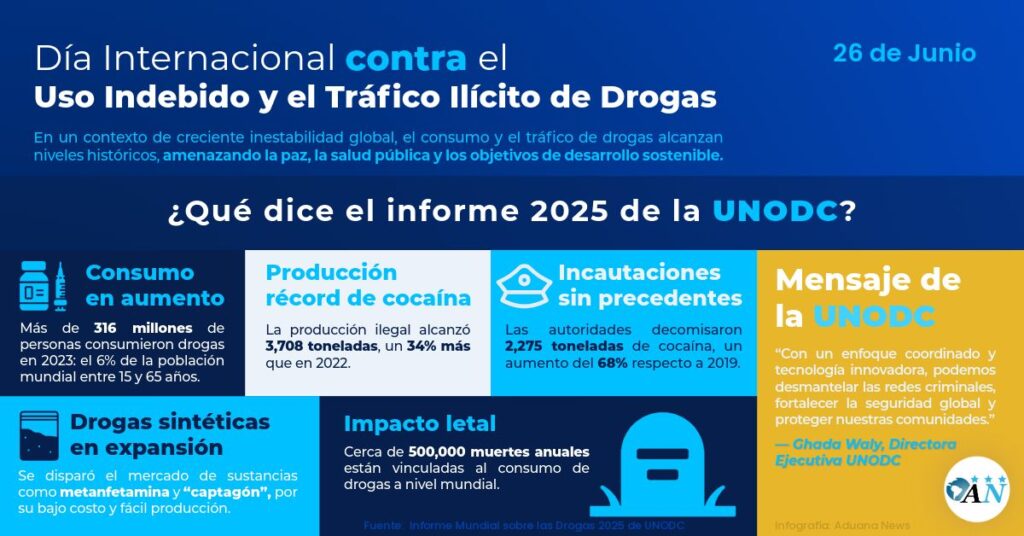
In the framework of the International Day against Drug Abuse and Illicit Trafficking, the United Nations Office on Drugs and Crime (UNODC) today (26.06.2025) presented its World Drug Report 2025. According to the document, global instability is aggravating the social, economic and security impact of the global drug phenomenon, empowering organized criminal groups and raising consumption to unprecedented levels.
"Drug trafficking continues to adapt and take advantage of crises to expand, particularly affecting the most vulnerable populations.", he claimed Ghada Waly, Executive Director of UNODC. He stressed the need for Strengthen international cooperation, invest in prevention, apply effective justice and take advantage of technology to dismantle criminal networks.
Amongst the main findings Of the report:
- 316 million people used drugs in 2023 (excluding alcohol and tobacco), which represents 6% of the world's population between 15 and 65 years old.
- El cannabis remains the substance most used, followed by opioids (61 million), amphetamines (30,7 million), cocaine (25 million) and ecstasy (21 million).
- La cocaine production reached a historic record: 3.708 tonnes , an 34% more in 2022.
- The global seizures They also shot up, reaching 2.275 tonnes , which represents an increase in 68% compared to 2019.
- El synthetic drug marketas the methamphetamine y “captagon”, continues its growth globally, due to low production costs and lower risk of detection.
- Drugs cause about 500.000 deaths annually and only one in 12 peopleas with substance use disorders received treatment in 2023.
- On the environmental level, the report warns about the effects of drug trafficking and production, including deforestation, contamination y toxic waste, especially in Europe.
The current situation is dire. UNODC warns that, in addition to its direct impact on health and security, the drug phenomenon represents a significant obstacle to achieving the Sustainable Development Goals (SDGs), affecting crucial areas such as justice, equity, the environment, and human rights.
As part of the multilateral responses to these challenges, UNODC and the World Customs Organization (WCO) have been promoting the Container Control Program (CCP), a joint initiative that seeks to strengthen port surveillance in developing countries to curb illicit trafficking, especially through maritime containers used by transnational criminal networks.
Argentina participates in this program.

Aduana News is the first Argentine customs newspaper to launch its digital version. With 20 years of experience, its publications and initiatives aim to provide the most relevant knowledge on customs issues in order to contribute to safe trade in the region.