
✔Introduction
The incorporation of the environmental variable in the customs area is not only an imperative of the times, In other words, it is not a current fad, but rather a current need with a projection into the future.: represents the institutional maturation of regulatory agendas that intertwine trade, sustainable development, and cross-border legal security. While historically, customs administrations were configured as instruments of fiscal control, economic defense, and protection of the domestic market, the 21st century requires a functional expansion that repositions them as the cornerstones of international climate governance.
This paradigm shift gained political legitimacy and significance with the holding of the 29th Conference of the Parties to the United Nations Framework Convention on Climate Change (COP29), held in Baku, Azerbaijan, from November 11 to 22, 2024. The agenda went beyond traditional diplomatic frameworks by clearly integrating the international customs structure into the field of climate action. It was in this context that Azerbaijan presented the Baku Declaration on Green Customs, a document that will be officially discussed at the 145th and 146th sessions of the World Customs Organization (WCO) Council, scheduled for June 2025 in Brussels.
This proposal represents not just a political gesture, but a transformation of the functional scope of customs: from an economic barrier to a vector of regulatory sustainability. Its eventual approval would imply the formal inclusion of environmental issues in the technical architecture of the global customs function. This move corresponds, by symmetry, to a demand for the repositioning of its main operators.
This article analyzes the foundations and implications of this process from the institutional perspective of the International Association of Professional Customs Brokers, an organization with an active presence on three continents. (1) and legitimate representation of thousands of professionals specialized in the interpretation and application of customs legislation. It is argued that professional customs agents, traditionally responsible for ensuring the legality and fluidity of cross-border flows, are now key technical actors for the effective implementation of the new climate governance in international trade.
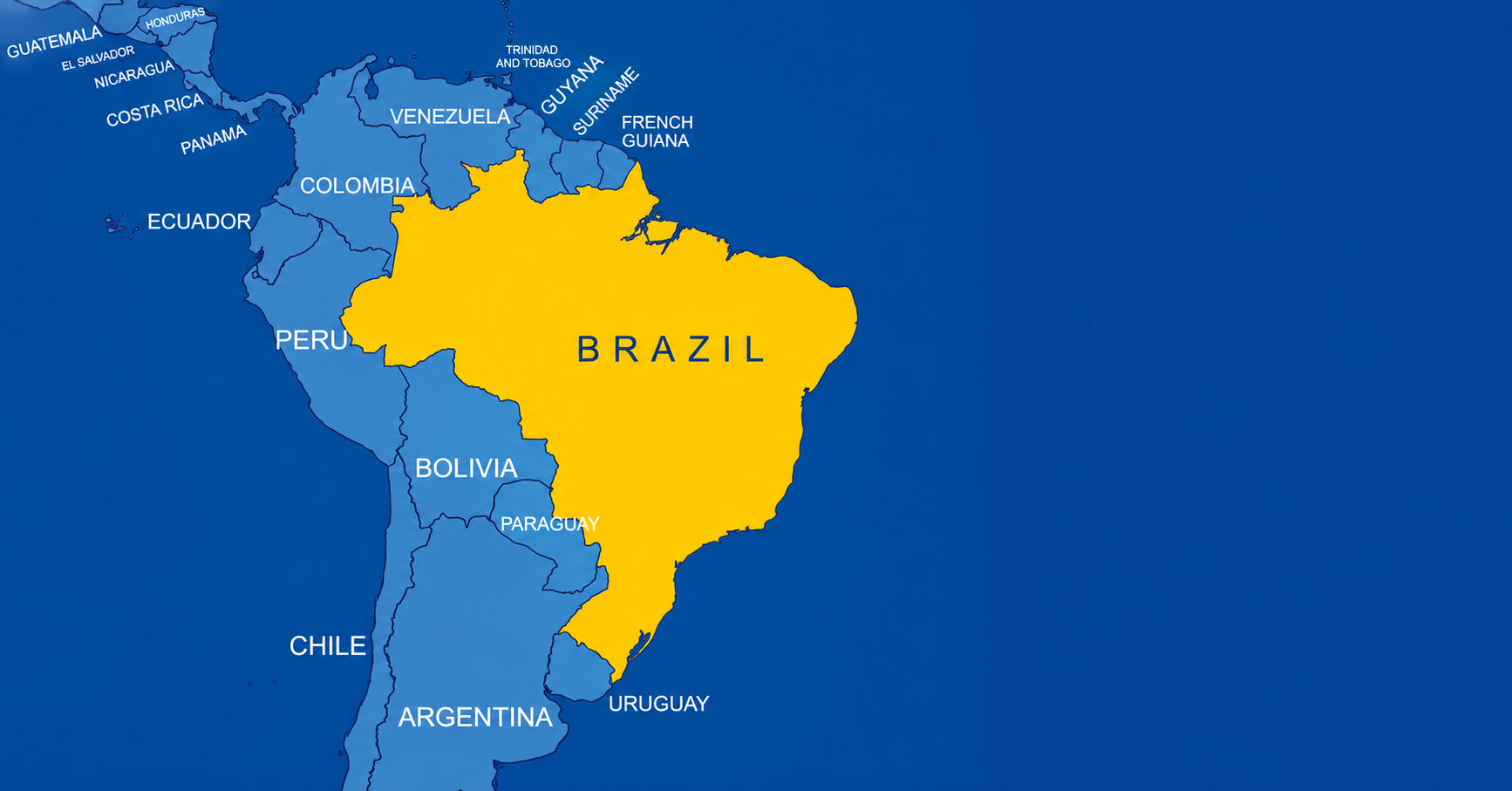
Between the regulatory frameworks of COP29 and the commitments that will emerge at COP30, to be held in Belém do Pará (Brazil), from November 10 to 21, 2025, this article affirms that green customs will only be viable if they rely on the technical competence of those who operate them daily. And that, in this new cycle, the specialized private sector—led by professional customs agents—must stop being a passive recipient of regulations and take on an active role in their formulation and implementation.
✔1. The Baku Declaration and the Repositioning of the Customs Function
The proposal for the Baku Declaration on Green Customs, formally presented by the Government of Azerbaijan during COP29, is neither a ceremonial act nor an empty diplomatic gesture. It is, in fact, a landmark normative piece that proposes reorienting the role of customs administrations in the context of the global ecological transition. Its inclusion as a deliberative topic at the 145th and 146th sessions of the World Customs Organization (WCO) Council—scheduled for June 2025 in Brussels—marks the definitive entry of the environmental variable into the functional structure of the international customs system.
The declaration proposes a new institutional mandate: that customs not only fulfill collection and economic control functions, but also formally assume operational responsibility for the implementation of multilateral environmental commitments. This approach does not arise in a vacuum. It is a direct result of an international environment in which trade in goods and services can no longer be separated from their climate impact, their ecological traceability, or their environmental legitimacy.
Customs, as the intersection between the global market and the national regulatory framework, is uniquely positioned to verify, facilitate, and regulate the entry and exit of goods based on sustainability criteria. However, this expansion of functions cannot be effectively implemented without technically qualified operators. And this is where the professional customs broker emerges as a key figure.
This professional, recognized for their legal qualifications and technical competence, serves as a mediator between commercial operators, customs systems, regulatory bodies, and the State. They interpret regulations, anticipate risks, manage authorizations, and ensure documentary and systemic compliance of operations. In the context of Green Customs, their role becomes even more relevant, as they must be able to identify products regulated by environmental conventions, correctly classify goods with potential ecological impact, and ensure that each operation complies with current environmental legislation.
In short, the Baku Declaration not only redefines the role of customs: it also revalues, from a climate perspective, the role of professional customs officers as technical enforcers of environmental law at borders. Its effective implementation will depend largely on the recognition, training, and active participation of these professionals in the design and implementation of the new green customs governance.
✔2. The WCO and the Regulatory Consolidation of Green Customs
The World Customs Organization (WCO) is the multilateral technical body with the highest authority on the standardization of customs procedures worldwide. Its role in harmonizing regulations, promoting good practices, and developing cooperative legal frameworks gives it a central role in the transition toward an environmentally responsible customs architecture. The inclusion of the Baku Declaration on Green Customs as an official item on the Council's agenda in June 2025 is a decisive step in this direction.
Since the publication of its Green Customs Action Plan in 2023, the WCO has given clear signals of its intention to integrate sustainability as a structuring pillar of its institutional strategy. However, the Baku Declaration represents a qualitative leap: it is not limited to programmatic guidelines, but raises the possibility of establishing a common regulatory basis to guide customs' actions in environmental matters, with direct repercussions on risk, enforcement, facilitation, and international cooperation.
The regulatory consolidation of this agenda requires a multidimensional approach. It is not enough to state principles: they must be translated into concrete mechanisms, applicable protocols, and objective criteria that can be implemented by public officials and private operators operating at the border. Among the latter, the professional customs agent stands out for his functional proximity to control processes, his knowledge of special regimes, and his ability to ensure regulatory compliance for each operation.
In this new context, customs are expected to:
- Incorporate environmental criteria into their risk analysis matrices;
- Establish green channels for sustainable goods or clean technologies;
- Develop capabilities to detect irregularities related to hazardous waste, protected species or restricted chemicals;
- Promote interoperability between customs systems and environmental authorities.
But none of these objectives will be achievable without the active participation of professional customs brokers, who already act as the technical interface between regulation and operations. The WCO, by promoting this agenda, has the opportunity—and the responsibility—to encourage their inclusion in technical discussion forums, in implementation pilots, and in the impact assessment of future measures.
A green customs system without a qualified technical operator is a regulatory illusion. And a climate governance framework that excludes the actors who guarantee its implementation lacks structural viability. Therefore, consolidating this agenda requires not only political will but also institutional intelligence. And that intelligence already exists: it is in the hands, practice, and accumulated experience of professional customs agents around the world.
✔3. The Professional Customs Agent as a Technical Executor of Border Sustainability
The transition to a green customs system is not built solely through political declarations, legal reforms, or investments in technology. Above all, it requires competent operators who understand the system, are familiar with the regulatory instruments, and can translate international commitments into concrete acts of compliance. Within this framework, the professional customs agent presents itself as an irreplaceable technical player in the implementation of sustainability at the borders.
By definition, this professional is legally authorized to represent importers and exporters before the customs administration. Their role is not merely administrative: it is technical, legal, and operational. They interpret regulations, process licenses, verify documentation, anticipate risks, and ensure that each transaction is properly aligned with current legal provisions. In the new paradigm of green customs, their role takes on an additional dimension: that of guarantor of environmental compliance at the most critical point in international trade.
Among the responsibilities that fall today—and will fall more heavily—on professional customs agents are:
- The appropriate tariff classification of products regulated by multilateral environmental conventions (such as the Basel Convention, CITES or the Stockholm Convention);
- Verification of supporting documentation, ecological certificates and environmental authorizations issued by competent bodies;
- The efficient use of integrated digital platforms (such as one-stop shops or foreign trade portals) for processing documents required in procedures with an ecological impact;
- Identifying and reporting inconsistencies that may conceal environmental violations within operations that appear to be regular from a fiscal perspective.
In this new environment, the professional customs broker is no longer simply a trade facilitator: he or she is a technical interpreter of environmental law. Their work is essential to ensuring that sustainability does not remain merely a rhetorical aspect, but rather becomes a daily operational practice, consistent with the commitments made by States at multilateral conferences on climate change and biodiversity.
Therefore, it is essential that these professionals be properly trained, institutionally recognized, and consulted in regulatory development processes. There will be no green customs without operators with green competence. And at the borders of the 21st century, sustainability will only be realized if it is accompanied by the experience and professional ethics of the agents who operate where goods, law, and territory intersect.
✔4. International Association of Professional Customs Brokers: Three Continents and One Technical Mission for Customs Sustainability
The International Association of Professional Customs Brokers (ASAPRA), founded in 1969 and headquartered in Montevideo, Uruguay, represents one of the most established organizations in the global customs system. Comprised of national associations of professional customs brokers from the Americas, Europe, and Africa, it has strong institutional ties with multilateral organizations such as the World Customs Organization (WCO), ALADI, UNCTAD, and the Inter-American Development Bank (IDB), as well as international organizations such as BASC, ALACAT, Global Alliance, and Procomex.
This intercontinental reach gives ASAPRA unique legitimacy to participate in strategic discussions on the future of customs. At a time when sustainability is emerging as a structuring axis of international trade and global tax cooperation, ASAPRA reaffirms its commitment to building a green customs system that is technically, viable, and operationally inclusive.
In its representative role, ASAPRA has assumed specific responsibilities, such as:
- Actively participate in WCO Council meetings, contributing to working groups on facilitation, compliance, technological innovation, and public-private cooperation;
- Promote ongoing training programs on sustainability, legitimate trade, environmental risk management, and regulatory compliance;
- Promote coordination between professional customs agents and national authorities for the implementation of green policies in primary and secondary control zones;
- Serve as a channel for technical dialogue between the specialized private sector and decision-making bodies on climate and customs policies.
The Baku Declaration, and the subsequent discussion that will take place at the WCO Council sessions in June 2025, represent an opportunity for ASAPRA to consolidate a historic position: the professional customs broker is not simply a clearing agent. He or she is a qualified, legitimate, and necessary player in the architecture of cross-border environmental compliance.
The experience accumulated by thousands of stakeholders across the region—from the major ports of the Southern Cone to the most remote border crossings in Central America—constitutes an institutional asset that must be mobilized to realize the commitments of COP29 and anticipate the strategic debates of COP30, which will be held in Belém, in the heart of the Amazon.
In this journey, ASAPRA reaffirms its commitment to partnership. Because sustainability isn't decreed: it's implemented. And in international trade, nothing is implemented without someone who knows the practice, masters the standards, and upholds legality with technical responsibility: the professional customs broker.
✔5. From Baku to Belém: Geopolitical Continuity and the Amazonian Symbolism of COP30
The sequencing of COP29, held in Baku, Azerbaijan, from November 11 to 22, 2024, and the next COP30, to be held in Belém do Pará, Brazil, from November 10 to 21, 2025, is not merely a temporary change of pace in the diplomatic calendar of climate change. It represents a significant geopolitical continuity that connects two regions with strategic environmental challenges: the Caucasus, a zone of Eurasian energy transition and logistics integration, and the Amazon, a biome essential to the global climate balance.
The choice of Belém, located in the heart of the Brazilian Amazon, as the host city for COP30 is a highly symbolic decision. It marks explicit recognition of the role of Amazonian countries and high-biodiversity regions in the architecture of the global ecological transition. But it also imposes a requirement: demonstrating that it is possible to reconcile environmental protection, sustainable development, and regulated international trade. And, in this balance, the customs function will be crucial.
Customs in the Amazon region face unique challenges: controlling difficult-to-trace river flows, overseeing forest products, combating wildlife trafficking, controlling dangerous goods, and preventing illegal extractive activities. Given this scenario, the notion of a green customs office is not a rhetorical luxury. It is an operational necessity to ensure that climate commitments are not violated in the daily practice of cross-border trade.
And this is precisely where the professional customs agent proves to be an essential figure. This professional is the one who:
- Understand the regulatory complexity that governs goods with environmental impact;
- Ensures the correct classification, documentation and processing of sensitive cargo;
- It acts as a link between companies, authorities, technological platforms and environmental organizations;
- Learn about the operational reality of peripheral, remote, and strategically exposed customs offices.
In Belém, the political narrative must be transformed into a technical proposal. Declarations of intent must give way to integrated action plans. And customs, more than ever, will be evaluated not only on its efficiency, but also on its ability to protect natural resources, prevent environmental crimes, and facilitate sustainable operations.
The International Association of Professional Customs Brokers is preparing to participate in this process. Drawing on its institutional experience, regional network, and strategic vision, it will propose a concrete agenda to strengthen the role of professional customs brokers as legitimate operators of sustainability. Because where there are borders, there are regulations. And where there is regulation, technical intelligence and professional responsibility are required.
From Baku to Belém, the message is clear: sustainability will not come to customs by decree. It will come from those who know them, operate them, and defend them with ethics and competence.
✔6. Conclusions: Sustainability as a structural mission of modern customs
The journey connecting the Baku Declaration (2024) with the expectations of COP30 in Belém (2025) redefines not only the role of customs in international trade, but also the very scope of its institutional mission. From a fiscal body and guarantor of economic order, customs becomes an agent of climate compliance, ecological legality, and operational sustainability. This transformation is not merely conceptual. It is normative, technical, and functional.
In this new paradigm, professional customs agents are no longer perceived as administrative intermediaries. They are becoming established as technical interpreters of environmental legality at the borders, specialized operators who, day after day, translate multilateral commitments into concrete decisions that affect the global flow of goods, services, and technologies.
This responsibility cannot be assumed without recognition, training, or participation. Therefore, the International Association of Professional Customs Brokers, as an international organization with a presence on three continents, reaffirms its commitment to:
- Defend the structural inclusion of professional customs brokers in global climate governance debates;
- Collaborate with customs administrations in the construction of technical sustainability models;
- Promote common standards that ensure harmonized implementation of Green Customs;
- And strengthen the capacities of its members to face the challenges of the new environmental regulatory cycle.
Sustainability cannot be an afterthought. It must become a customs function, with structures, protocols, and operators capable of making it a reality. And effective implementation will not be possible if those with the knowledge, experience, and direct responsibility for critical international trade processes are excluded.
On the borders of the 21st century, sustainability is a matter of practice. And the person who practices it, with competence and commitment, is the professional customs agent.
- America, Europe and Africa.
Highlighted
- Azerbaijan. (2024). National Declaration at the High-Level Segment of COP29. Conference of the Parties, UNFCCC. Available at: https://unfccc.int/documents/644666
- World Customs Organization. (2023). Green Customs Action Plan. Brussels: WCO.
- World Customs Organization. (2025). SC0238Ea – Council Work Programme 145/146 – June 2025. Brussels: WCO.
- Secretariat of the United Nations Framework Convention on Climate Change (UNFCCC). (2024). Summary of Global Climate Action at COP29. Bonn: UNFCCC. Available at: https://unfccc.int/documents/644497
- UNFCCC. (2024). CMA.11(a). New Collective Quantified Climate Finance Target (NCQG). Baku: United Nations. Available at: https://unfccc.int/documents/637131
- UNFCCC. (2024). Decision -/CMA.6: New Quantified Collective Target on Climate Finance. Bonn: United Nations.

Customs Broker, with a degree in Economics and a Master in Business Administration in Business Management from Fundação Getulio Vargas (FGV). Co-founder of EBIMEX Comércio Exterior and Director of the Union of Customs Brokers of São Paulo (SINDASP), Brazil. He works as an Advisor on Marketing and Institutional Communication at the International Association of Professional Customs Agents (ASAPRA) and is a member of the Brazilian Chamber of Pharmaceutical Products (CBFARMA) of the CNC. He holds certifications in Artificial Intelligence from the OAS (Organization of American States) and in Marketing and Communication from the International Business Management Institute (IBMI), Germany.

Official of the General Directorate of Customs of the Dominican Republic, dwhere he works in areas related to customs modernization and trade facilitation.