“Borders separate, customs connect”
When referring to the concepts of foreign trade, international trade or world trade, we refer to the set of economic transactions that include the exchange of goods and services between countries, as well as their internal markets.
For our countries, international trade operations are of great importance in the economic development of nations and are closely related to the exchange of products and the movement of resources and capital, which is why they have a great influence on the creation of jobs, public and private investment, as well as the establishment of economic policy in each of the nations.
Since its establishment in 1952, the World Customs Organization (WCO) has been working to improve the efficiency of Customs Administrations by developing international standards, promoting cooperation and building capacity to facilitate legitimate trade, ensure fair revenue collection and protect society. To this end, it is strategically structured to meet the different needs of its 185 Member States and is organized into 3 directorates that provide support, guidance, tools and technical assistance. These are:
- The Directorate of Tariff and Trade Affairs. Responsible for classification (nomenclature), valuation and rules of origin matters.
- The Compliance and Facilitation Directorate. Responsible for compliance, enforcement, procedures and trade facilitation matters and;
- The Directorate of Capacity Building. Responsible for coordinating and providing capacity building, technical assistance and training to WCO members for the purposes of organizational development, reform and modernization.
The highest decision-making body in the WCO is the “Council” and is composed of all Member States who provide oversight and strategic direction for the Organization during its annual meeting.
WCO membership is divided into six regions, each represented by a Regional Vice-Presidency. The Americas and Caribbean Region (AMERICARIBE) is made up of 33 Member States divided into the following sub-regions:
- North America: Canada, United States of America and Mexico.
- Central America: Costa Rica, El Salvador, Guatemala, Honduras, Nicaragua and Panama.
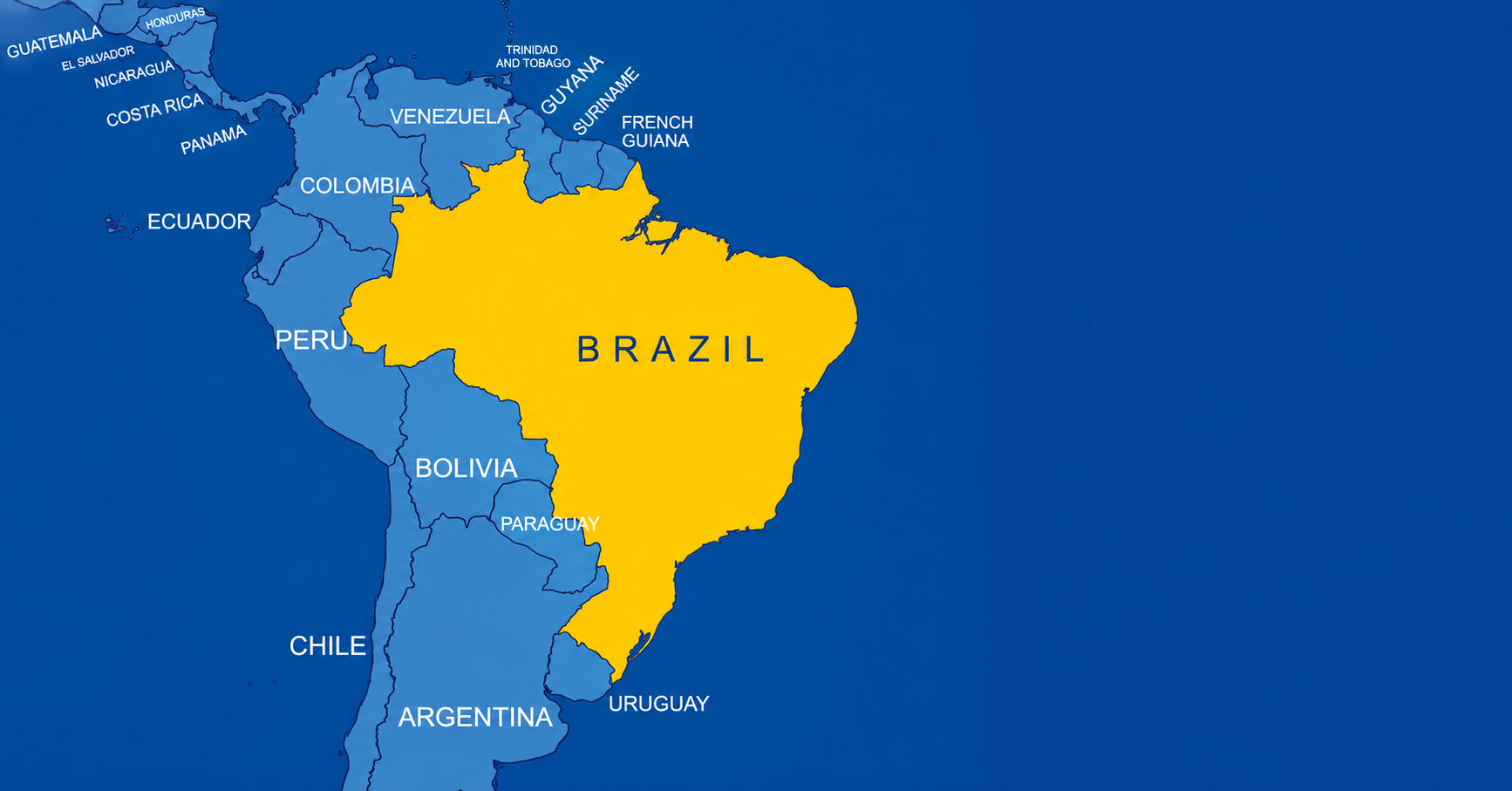
- South America: Argentina, Bolivia, Brazil, Chile, Colombia, Ecuador, Guyana, Paraguay, Peru, Suriname, Uruguay and Venezuela.
- El Caribe: Antigua and Barbuda, Bahamas, Barbados, Belize, Bermuda, Cuba, Curacao, Haiti, Jamaica, Dominican Republic, Saint Lucia and Trinidad and Tobago.
The position of Regional Vice President of AMERICARIBE is currently held by the National Superintendence of Customs and Tax Administration of Peru.
The Members' perspective constitutes the layer on which the WCO's actions are based to address these identified needs and are articulated in four strategic axes contained within the Strategic Plan 2022-2025:
- Trade facilitation.
- Revenue collection.
- Protection of society.
- Organizational development.
Along the same lines, in the area of foreign trade, Customs Administrations are responsible for ensuring compliance with international trade agreements and for controlling international trade operations, acting jointly with all interested parties. They are a key border agency in charge of all international trade transactions and a central government administration responsible for the implementation of the World Trade Organization (WTO) Trade Facilitation Agreement (TFA), among others. In this regard, the WCO has continuously encouraged its Members to take an active approach in the WTO negotiations on Trade Facilitation.
The TFA has been particularly important in all these efforts, as it has not only demonstrated the commitment to the multilateral trading system, but has also brought with it a higher level of predictability and transparency in customs processes and has been consolidated to date with the ratification of the agreement by 154 Member States of the World Trade Organization, thereby denoting the leading role that customs have, having more than 90% of responsibility in implementing actions that allow compliance with the commitments acquired after its ratification. Of the Member States that have ratified the TFA, 27 belong to the WCO Region of the Americas and the Caribbean.
In the context of the WCO, trade facilitation means the elimination of unnecessary restrictions on trade and that this can be achieved through the application of modern techniques and technologies, while improving the quality of controls and ensuring that they are harmonized in accordance with international good practices. A key tool in this context is the Kyoto Convention on the Harmonization of Customs Procedures which entered into force in 1974, and which was followed by the Revised Kyoto Convention in 1999. The WCO has 185 Member States responsible for managing more than 98% of world trade and of these, 133 have ratified[1] This agreement is being ratified worldwide; and in the Americas and the Caribbean Region, Argentina, Brazil, Canada, Cuba, the United States of America, Guatemala, Jamaica and the Dominican Republic have ratified it.
The WCO, in turn, developed a comprehensive Capacity Building Strategy in this area with the aim of supporting its Member States in developing or acquiring the skills, competencies, tools and resources necessary to enable Customs Administrations to improve their capabilities in order to fulfil their functions, including the MERCATOR Programme, the guide for the “Implementation of the WTO Trade Facilitation Agreement” and the WCO guidance on “National Trade Facilitation Committees”.
In terms of harmonization, the WCO has developed and introduced the Harmonized Commodity Description and Coding System, which is used worldwide as the basic system for classifying goods and collecting customs duties. It also administers the WTO Valuation Agreement and has implemented harmonized Rules of Origin that have been submitted to the WTO for review.
As noted, cooperation between the World Customs Organization and the World Trade Organization is close and productive, and is also reflected in the joint and regular participation in key meetings, making substantive contributions to negotiations within the framework of the WTO, as well as extensive collaboration in the area of technical assistance and development of support instruments.
Likewise, globalisation and other strategic drivers require an approach to managing the movement of goods through international logistics chains and borders, and the WCO has consolidated this in the instrument called “Customs in the 21st Century”, which promotes growth and development by facilitating trade and strengthening security at borders. The components that make up this instrument are:
- Globally connected customs, which involves closer collaboration between customs administrations and stakeholders on the use of data, connectivity, customs controls and the recognition of Authorized Economic Operator Programs, among others.
- Better coordination of border management, which involves effective cooperation between all authorities and bodies involved in border control processes and regulatory requirements applicable to passengers, goods and means of transport.
- Information-based risk management and in effective decision-making based on it.
- Customs-business collaboration, such as establishing strategic agreements with reliable operators and ensuring that collaboration is mutually beneficial.
- Implementation of modern working methods, procedures and techniques, This implies constant innovation in customs and the implementation of comprehensive customs modernization programs for processes, infrastructure, technology, security and human resources.
- Use of high-performance technology and instruments.
- Integrity, taking as reference the factors contained in the Revised Arusha Declaration[2] and the instruments made available by the WCO.
I would like to highlight another important point on which the WCO has been actively working and which it demonstrates in various instruments, thereby contributing significantly to foreign trade operations and the security of the supply chain; I am referring to the three pillars of the SAFE Regulatory Framework: collaboration Customs – Customs; Customs – Businesses and, Customs – Other Government Services. Remarkable work schemes that demonstrate that together we can contribute to the improvement of customs services and foreign trade operations.
From the collaboration between Customs and the Private Sector arise the Programs promoted by the WCO on the figure of the Authorized Economic Operator, which in general, are individuals or legal entities that, in compliance with international security standards and the norms, requirements and obligations established in the current customs legislation, other laws and internal regulations and after going through a qualification process by the Customs Service (of each country), are considered "reliable, safe" and will enjoy the facilities granted by these Customs Services, in their relationship as partners.
To date, the Region of the Americas and the Caribbean is actively promoting the topic and the AEO programs, which are strengthened with the support of the WCO. During the period from 2020 to 2022, I had the honor of being Regional Vice President of the World Customs Organization for the Americas and the Caribbean, a position in which an important achievement was obtained, such as the signing of a Regional Mutual Recognition Agreement (MRA) for the figure of the Authorized Economic Operator, an event that took place in Sao Paulo, Brazil on May 18, 2022, with the participation of 11 Customs Administrations, being: Argentina, Bolivia, Brazil, Chile, Colombia, Costa Rica, Guatemala, Paraguay, Peru, Dominican Republic and Uruguay.

With this decision, Customs reaffirmed its will and commitment to generate a space for cooperation to strengthen legitimate trade. This Mutual Recognition Agreement is characterized by having the largest number of signatory countries in the world, which reflects the leadership of the AMERICARIBE region in trade facilitation efforts.
Future Challenges
Our countries are recovering from the crisis caused by the COVID-19 pandemic and, for organizations such as the World Customs Organization, this meant initiating actions for structural and functional modernization, which they are working on and which once again demonstrated the leading role that customs have in the management and control of foreign trade operations and the special interest that should be given to new ways of working, electronic commerce of goods and services, the use of technology and data management, the strengthening of collaboration and inter-institutional strategic alliances between Customs, other government agencies and the private sector, among others.
The challenges are great, but we are an active and entrepreneurial region and by taking advantage of the opportunities, tools and benefits of WCO assistance, we can acquire best practices to successfully manage the changes and strengthening that international trade brings about.
Finally, it is important to highlight that the World Customs Organization is about to hold elections in July 2023 for the position of Secretary General of the Organization. At the moment, the candidacy of the United States Customs Administration has been presented, through Mr. Ian Saunders, who has extensive experience in the customs and trade field; which reaffirms the leadership and capabilities that exist in our region.
[1] Information available on the WCO website at the following link: https://www.wcoomd.org/en/topics/facilitation/instrument-and-tools/conventions/pf_revised_kyoto_conv.aspx)
[2] https://www.wcoomd.org/en/topics/integrity/instrument-and-tools.aspx.

Deputy Minister of the Ministry of the Interior since January 15, 2024
and was Superintendent of Customs of the Superintendency of Administration
Tax Authority -SAT- for 7 years and 9 months. He was Regional Vice President
of the World Customs Organization for the Americas and the Caribbean
from July 01, 2020 to June 30, 2022.
He holds a degree in Legal and Social Sciences from the University
Rafael Landívar. He has 3 master's degrees in Politics, Public Security, as well as
of Integration and Development, is a graduate of the Senior Management Program of
INCAE Business School. He is a professor at the Faculty of Political Sciences of
Rafael Landívar University, at the master's and bachelor's levels.
In the Ministry of the Interior he will be in charge of strengthening the
security at borders, seaports and airports with special
emphasis on anti-narcotics, immigration and smuggling issues.
He has extensive experience in Central American integration,
analysis of information and inter-institutional coordination, thanks to the
management carried out both in the public sector and in Organizations
International in his more than 22 years of professional career.